
Introduction
- Is there a social justice issue you really care about?
- Do you want to learn how to make change in your community?
- Are you ready to move from talking about these issues to gaining skills that will help you take action and be an agent of change?
The Center for Civic Engagement offers a variety of programs to help you explore social justice issues, develop advocacy skills, and take action. Our advocacy work focuses on providing leadership and support for social and environmental issues impacting our many communities. We collaborate with campus and community organizations to help raise awareness and address the pressing matters of our time. From meeting with students one-on-one, leading our annual Advocacy Month, and hosting Civic Dinners, the CCE provides students the opportunity to learn, develop, and implement important advocacy skills and tactics. The CCE has opportunities for all students interested in making a positive impact on their communities.
Advocacy Month
Advocacy Month
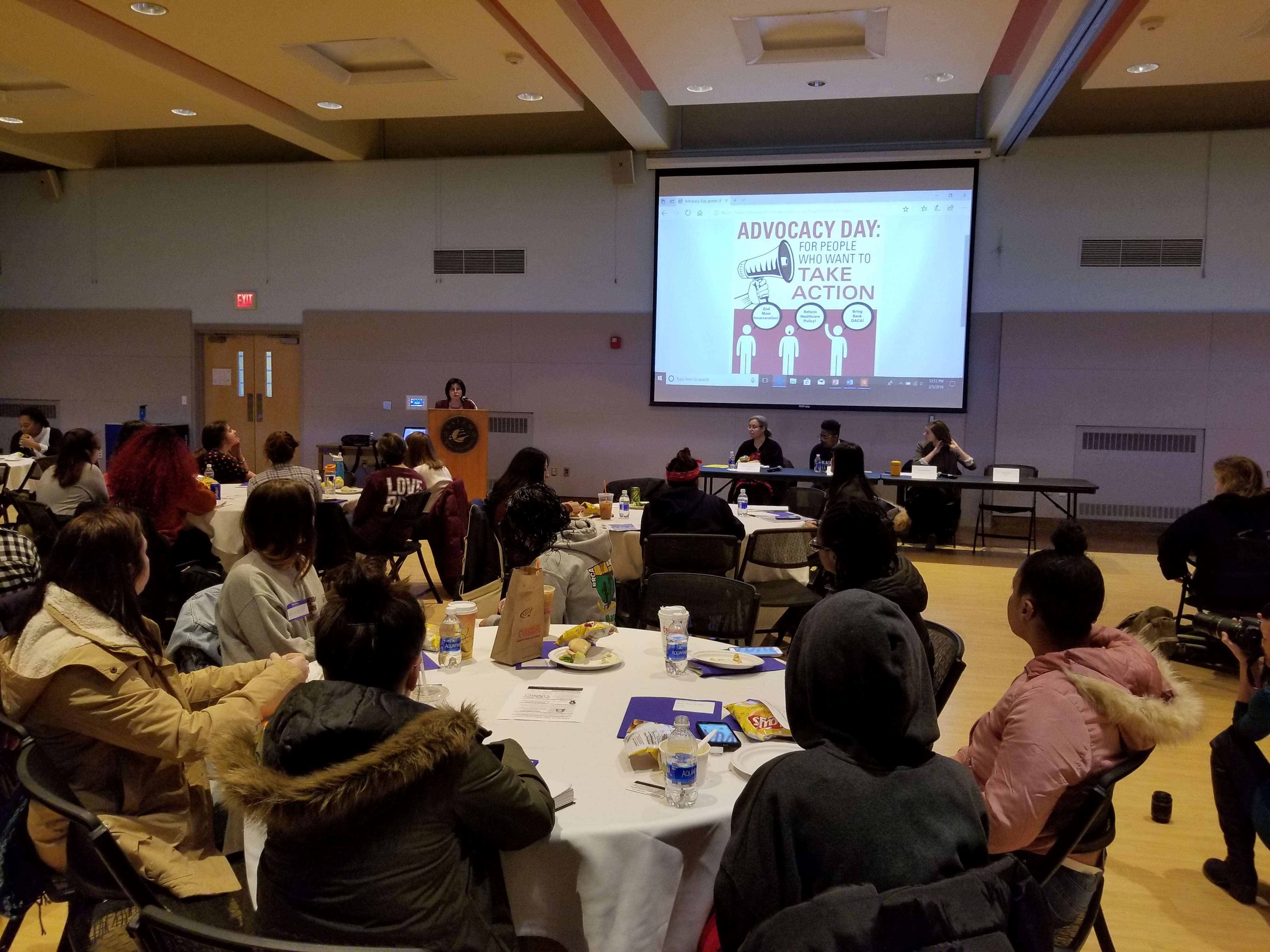
Salem State’s Annual Advocacy Month is 31 days of programming during March where students learn about social justice issues and gain activist skills. The month includes workshops, opportunities to engage in advocacy, and learn and network with local advocates. Social justice issues addressed in previous years have included: immigration, voting rights, women’s rights, economic and housing justice, racial justice, and LGBTQ+ rights, among others. This annual program began as Advocacy Day in 2017, became Advocacy Week in 2021, and in 2022 was officially Advocacy Month.
Advocacy Month programs are open to the public. are open to the public. Please contact the Center for Civic Engagement if you, your organization, or your school are interested in attending.
Advocacy Education
Advocacy Education
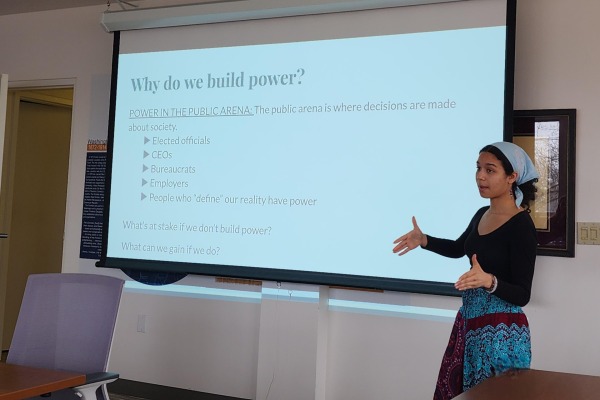
The Center for Civic Engagement provides curricular and co-curricular programming on advocacy, collaborative problem solving, and civic engagement. Through classroom workshops, panels, talks, civic dinners, Advocacy Month, advocacy consultations, and other initiatives, the CCE prepares students with the tools and experiences to engage in the public good.
The CCE’s workshops are highly engaging, student-centered, collaborative, and reflective. Each session incorporates brief lectures, peer-on-peer instruction, small and large group discussions, experiential activities, and project-based learning.
Advocacy in the Classroom Workshop (Also Known as Advocacy 101)
Provides students with opportunities to:
• Explore advocacy and cocreate a shared class definition.
• Identify social issues connected to their lived experiences and passions.
• Discover their civic identity and role within the Social Change Ecosystem Map.
• Recognize personal strengths and apply them to advocacy efforts.
• Learn from peers who have led successful advocacy campaigns.
• Examine advocacy tactics and determine effective strategies for different audiences.
• Identify elected officials and key power players and understand their role in the advocacy process.
• Collaborate with peers to develop advocacy goals, organizing skills, and strategies to address real world challenges.
Advocacy as a Genre of Writing
Provides students with opportunities to:
• Understand why writing is an effective tool for advocacy.
• Learn how to write letters to elected officials, op-eds, and letters to the editor.
• Explore the key components and guidelines of each form of writing.
• Identify supporting documents that strengthen their advocacy writing.
• Recognize elected officials and key power players connected to their advocacy efforts.
• Analyze sample letters to elected officials to determine what makes advocacy writing effective.
• Collaborate with peers to draft a piece of advocacy writing using a guided framework.
• Share and reflect on their written work with classmates.
Civic Dinner Series
Civic Dinner Series
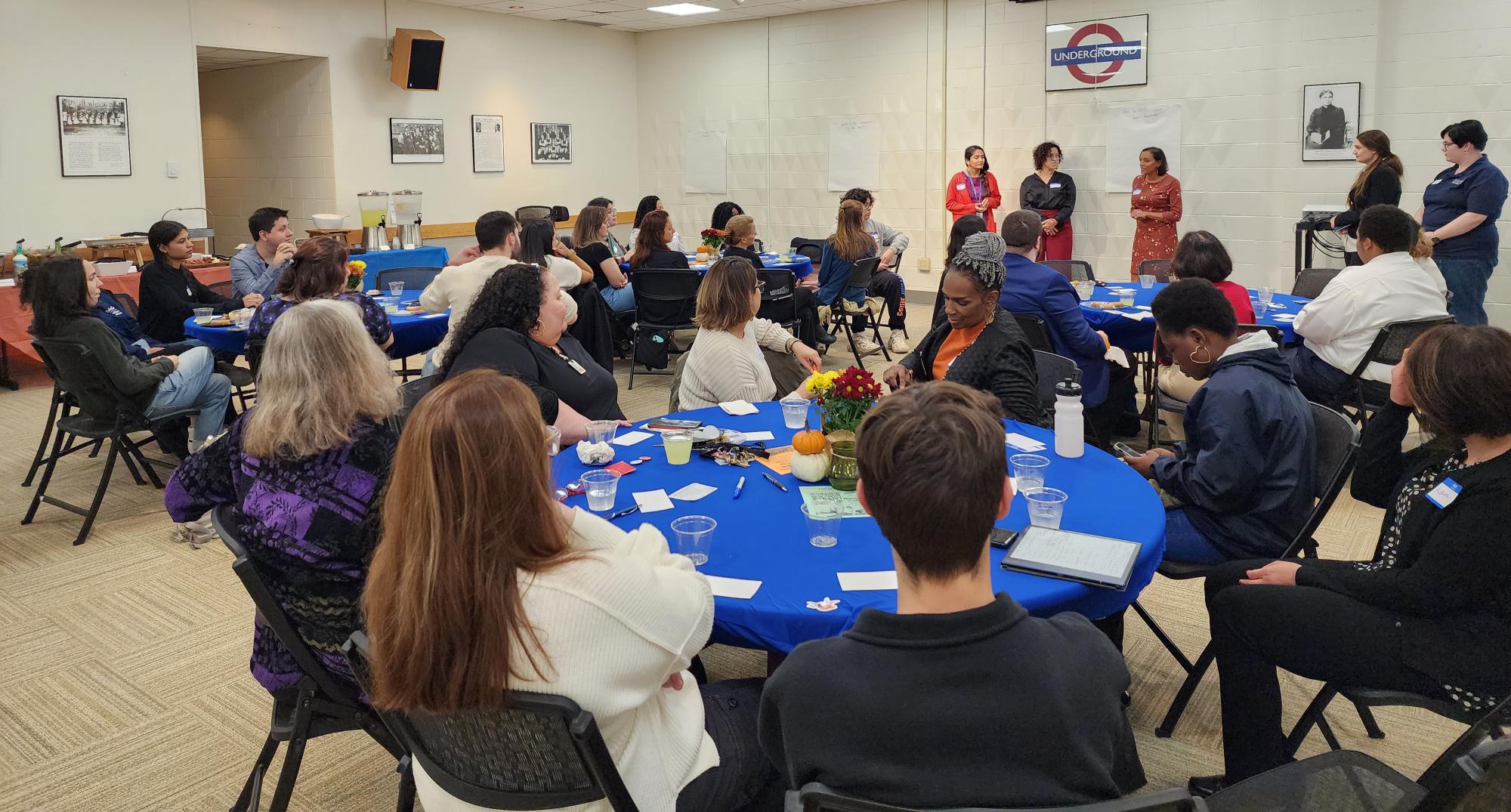
In the Fall of 2021 the Center for Civic Engagement launched their Civic Dinner Series. This series provides students with the opportunity to network and learn from local advocates, community leaders, and their peers on important social and environmental issues over a catered meal. These dinners were developed to help students build community and social capital with folks who care about addressing similar community challenges. This series includes four dinners an academic year. Past dinners have focused on mental health, racial justice, food and housing security, criminal justice reform, LGBTQ+ rights, environmental justice, disability advocacy, reproductive justice, sexual violence prevention and survivor advocacy and more.
Just-in-Time Advocacy
Just-in-time Advocacy
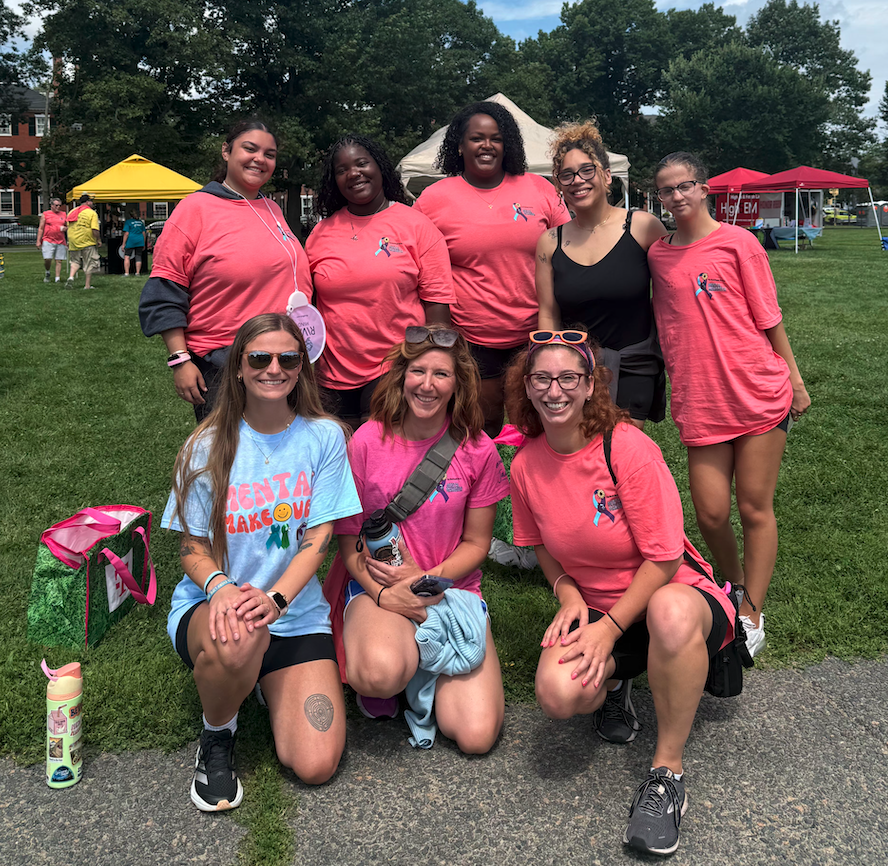
Just-in-time Advocacy responds to issues that arise on campus, in our local, national, and global communities through advocacy education and outreach. Initiatives have included postcard parties, petitions, large scale events, and discussions with elected officials. Past initiatives included advocacy for DACA, TRiO, LGBTQ+ rights, sexual violence on college campuses, and mental health. Please contact the CCE to share ideas for current issues we can respond to with just-in-time advocacy.
Mental Health Political Advocacy Coalition (MHPAC)
Mental Health Political Advocacy Coalition (MHPAC)
The Mental Health Political Advocacy Coalition is student-led initiative dedicated to advocating for improved mental health support for students across the Commonwealth. The coalition believes that mental wellness is essential for academic success and every student, regardless of their background, deserves access to the resources they need to feel supported, understood, and empowered.
Coalition members meet monthly to organize events, engage in advocacy efforts both on and off campus, and create opportunities for students to learn wellness strategies from advocates and one another.
Contact your Elected Officials
Contact your Elected Officials
One way to be an effective advocate is by contacting your elected officials to express your views and concerns for issues you care about. These officials are elected to represent you when making decisions about laws, services, and budgets. In order to accurately represent you, they need to hear from you to understand your values and issues that are important to you. You can do this by writing a letter, making a phone call, sending an email, or even scheduling a time to meet with them in person! Find your federal, state, and local elected officials and their contact information.
Contact Us
Center for Civic Engagement
Mailing Address: 352 Lafayette St. Salem, MA 01970
352 Lafayette St.
Salem, MA 01970