
| Contact |
Professor Steven Silvern
|
|---|
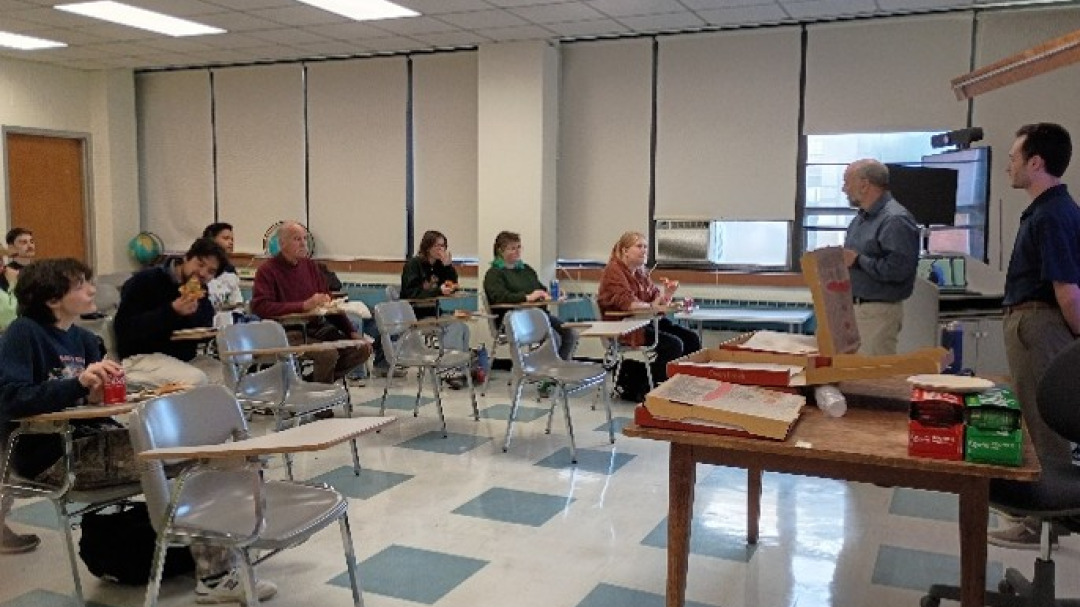
On October 22, Salem State’s Geography & Sustainability Department welcomed alumnus Ben Quintal (Class of 2019), Development Director at Our Neighbors’ Table, for a conversation about food access, food insecurity, community engagement, and professional development. The event was part of the department’s Alumni Speaker Series on Career Pathways, which brings alumni back to campus each month to share their professional experiences, introduce students to diverse career opportunities, and explore how geographic knowledge and skills translate into practice. It drew more than 20 students, along with faculty members, and prompted a wide-ranging discussion about the challenges of building a more equitable and resilient regional food system.
Our Neighbors’ Table, a nonprofit organization based in Amesbury, Massachusetts, works to address food insecurity across the Lower Merrimack Valley. Through free grocery markets, community meals, and regional partnerships, the organization seeks to ensure reliable access to nutritious food while emphasizing dignity, choice, and community participation. Its work extends beyond direct food assistance to strengthening regional food systems through collaboration and shared infrastructure. Drawing on his work at Our Neighbors’ Table, Ben discussed the complexities of food distribution and delivery, the barriers communities face in accessing nutritious food, and the importance of partnerships and coordination among organizations working to address food insecurity.
The conversation also explored career pathways, the importance of developing both technical and interpersonal skills, and finding opportunities to work on issues we care about. A significant part of the discussion focused on soft skills and their role in professional and community-based work. Beyond technical expertise, Ben emphasized the importance of communication, active listening, adaptability, and relationship-building. Students and faculty discussed what it means to connect meaningfully with communities, build trust over time, navigate competing priorities, and work through the challenges and uncertainties that arise when addressing complex social issues. A recurring theme was the art of showing up: being present, following through on commitments, and investing in relationships even when progress is slow. The discussion highlighted how effective community work depends on building coalitions, sustaining collaborations, and finding common ground among organizations and individuals with different priorities and capacities.
The seminar offered students and faculty an opportunity to connect academic perspectives in geography and sustainability with the realities of professional practice, highlighting how disciplinary knowledge, interpersonal skills, persistence, and collaborative approaches come together in efforts to address pressing community challenges.
We would like to extend our thanks to Ben for returning to Salem State and generously sharing his experiences and insights, and to the students and faculty whose questions and contributions made for such a thoughtful and engaging conversation.