
| Where |
Ellison Campus Center
North Campus, 1 Meier Drive, Salem, MA
MLK Room
|
|---|---|
| When |
9:00 am - 2:30 pm
Sep 24, 2026
|
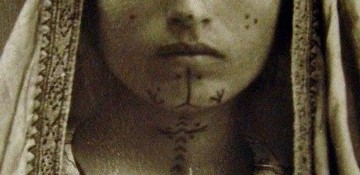
During the Armenian Genocide, more than one million men, women and children became the victims of genocidal violence. They experienced this violence in similar but different ways because of their gender and roles in society. Gender-based violence accompanied all aspects of the genocide from the first massacres of male elites and military-aged men and boys to the abduction of women and girls along the deportation routes and forced marches into the Syrian desert. Please join the CHGS for a workshop on the Armenian Genocide and the role of gender in the lived experiences of victims and survivors. During the workshop, educators will be provided with a historical overview of the genocide followed by sessions focused on the gendered experiences of women and children and strategies and resources that can be used to teach this topic effectively.
School districts wishing to send teams of teachers as well as individual teachers wishing to reserve a spot for the workshop should contact us at chgs@salemstate.edu.
Alex K. Kyrou is Professor of History at Salem State University. He has authored multiple book chapters, journal articles, and review essays that focus on famine relief in Axis-occupied Greece, Greek America and Balkan Diasporas, Orthodox Christianity and the origins of international humanitarianism, war and peace in Byzantium, and US foreign policy in Southeastern Europe. A former Associate Editor of the Journal of Modern Hellenism, Dr. Kyrou has written more than eighty essays, commentaries, and book reviews on Greek history, Byzantine civilization, and Ottoman history and Turkish politics, as well as the Armenian and Greek Genocides for cultural, civic, and popular publications.
Elyse Semerdjian is Robert Aram and Marianne Kaloosdian and Stephen and Marian Mugar Chair of Armenian Genocide Studies at the Strassler Center for Holocaust and Genocide Studies at Clark University. She has authored “Off the Straight Path”: Illicit Sex, Law, and Community in Ottoman Aleppo (Syracuse University Press, 2008) and Remnants: Embodied Archives of the Armenian Genocide (Stanford University Press, 2023), winner of the 2024 Association of Middle East Women’s Studies best book prize and the 2025 Raphael Lemkin Book Award by the Institute for the Study of Genocide. She teaches the history of the Armenian Genocide, gender and sexuality, and the Middle East at Clark University.
This event is cosponsored by the Public History Speakers Series and the Interdisciplinary Studies department.
Contact
Accessibility
For access and accommodation information, visit our page on access or email access@salemstate.edu.